

The United States of America is celebrating its 250th anniversary, with numerous events across the country throughout 2026. The Semiquincentennial is an opportunity for Americans to reflect on the nation's past, present, and future, while recognizing the contributions of all Americans throughout history during the nation's 250th anniversary.
As the Fourth of July holiday approaches, JSA Senior Vice President James Spence III reflects on the beginning of our nation through five top-tier Founding Father era autographs, using the JSA-authenticated historic items they have examined, tying past to present through these impressive collectibles.
Founding Father Signatures
Many assume that all of the Founding Fathers signed the Declaration on July 4, 1776, but that is not the case. Instead, most of these integral figures in early American history lent their signatures to the document on August 2. In fact, during that first week of July, George Washington and Alexander Hamilton were in New York preparing for battle, and Patrick Henry was in Virginia.
Authentic documents from any Founding Father that are actually dated "July 4, 1776" are virtually nonexistent outside of museums, which means anything with that exact date on the open market is a major red flag as a possible forgery. Thanks to JSA, the world leader in autograph authentication, each of the collectibles below are guaranteed authentic, making each a historic American collectible with ties to our nation's independence.
George Washington
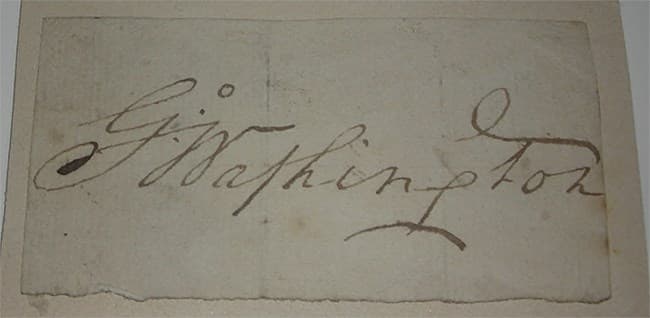
George Washington, the first president of the United States (1789-1797), is sometimes referred to as the "Father of His Country" for his pivotal role in helping shape the early United States. As the Commander-in-Chief of the Continental Army, he led patriot forces to victory against the British in the American Revolutionary War, securing America's independence.
What to look for: While Washington didn't sign the Declaration of Independence, his incredibly clean script is the ultimate holy grail for collectors. Authentic examples are usually uniform and consistent, often found on Revolutionary War military discharges, land deeds, or clipped signatures like this cut.
Value and risk: Highly targeted by forgers. A genuine cut signature is worth $8,000 to $12,000, while full handwritten wartime letters routinely command $250,000+.
John Adams
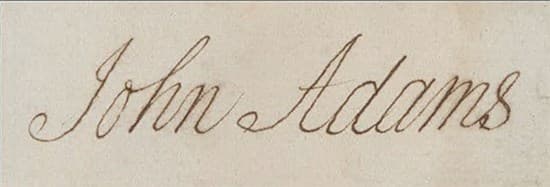
A lawyer and political activist, Founding Father John Adams was a leader of the American Revolution and served the Continental Congress of the United States as a senior diplomat in Europe. He was the first-ever US vice president during Washington's tenure before serving as the second president of the United States (1797-1801).
What to look for: John Adams, the "Voice of Independence" and second US president, has a very recognizable, compact script. Because early collectors loved cutting his signature out of full letters, isolated cuts like this one are the most commonly found autographs from him today.
Value and risk: Moderate to high forgery risk. A clean-cut signature is worth $3,500 to $5,500, whereas a complete handwritten letter can easily reach $100,000.
Abigail Adams
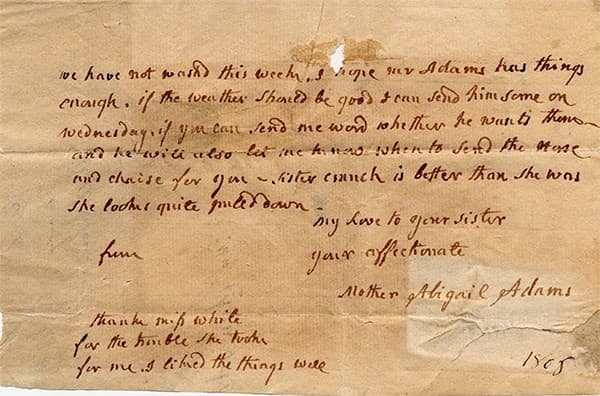
Abigail Adams is widely considered to be one of the most influential female figures during the founding of the United States. She was not only the wife of President John Adams but also his closest advisor, confidant, and intellectual partner throughout their life together. As both the first second lady and second first lady, Abigail is also the mother of John Quincy Adams, the sixth president of the United States.
What to look for: As a premier "Founding Mother" and vital advisor to John Adams, Abigail Adams offers an incredible look at the home front through her letters. This piece is exceptional because she signed it with the rare, intimate closing of "Mother Abigail Adams."
Value and risk: Extremely rare because women's papers from the 1700s were seldom saved. Cut signatures bring $3,000 to $5,000, while important handwritten letters can break records at $100,000 or more.
Thomas Jefferson
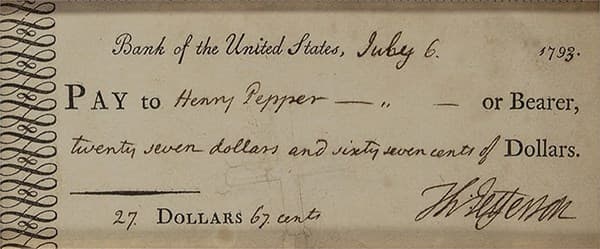
Founding Father Thomas Jefferson served as the second US vice president under John Adams and as the third US president from 1801 to 1809. He was a central figure in the American Revolution, the primary author of the Declaration of Independence, and a strong advocate for individual rights, religious freedom, and education.
What to look for: The primary author of the Declaration of Independence almost always abbreviated his name to "Th: Jefferson" on financial items (like this Bank of the United States check from his time as Secretary of State) and official documents.
Value and risk: High risk of fakes, including period-correct mechanical copies. A real cut signature is worth around $4,000, while routine signed documents fetch $8,000 to $18,000, and handwritten letters can clear $150,000.
Alexander Hamilton
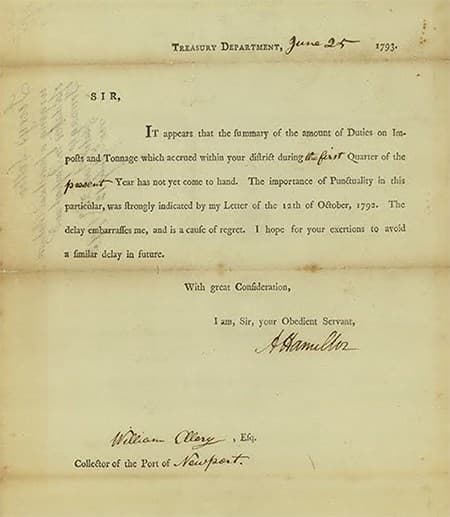
Alexander Hamilton was a Founding Father of the United States, the first US Secretary of the Treasury (1789-1795) under the presidency of George Washington, and a key architect of the nation’s financial system. Hamilton was also the founder of the Federalist Party in 1791, which was the first political party in the US. Renewed interest in his life was brought about by the popular Broadway musical "Hamilton," which premiered in 2015.
What to look for: Thanks to massive pop culture demand in recent years, Alexander Hamilton's bold "A. Hamilton" signature is highly coveted. You will most often see valid examples on official Treasury Department circulars from the early 1790s, like this letter regarding import duties.
Value and risk: Heavily targeted by modern forgers using old paper. Routine signed Treasury documents like this fetch $8,000 to $20,000, while full handwritten letters regularly pass $120,000.
About JSA
JSA was founded in 2005 by James Spence, Jr., and today is recognized everywhere as the premier autograph authentication service for all types of collectibles, with a particularly esteemed reputation in the sports collecting world. In the last two decades, JSA has certified millions of autographs and in the process has built the world’s largest autograph database of nearly 1 million images encompassing virtually every known person. JSA uses this extraordinary database alongside deep expertise and state-of-the-art equipment to maintain unparalleled accuracy in autograph authentication.