

In 2022, CGC stunned the Pokémon collecting community when the card graders announced that they had graded an elusive Base Set Charizard test print. Since then, CGC has graded 10 additional examples of the amazing Base Set Charizard Disco Holo test print cards, as well as Disco Holo test print examples of every other Base Set holographic card (except for Machamp, which was printed on a separate sheet).
Recently, a set of Disco Holo test print cards were submitted to CGC for grading, including a Base Set Charizard and a Machamp. Unfortunately for the submitter, none of these cards were genuine.
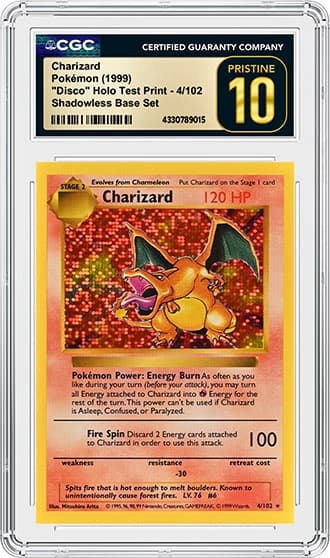
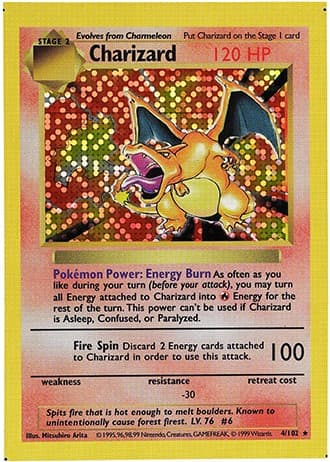

As shown in the photos above, the fake card may appear to be well-made at first, with a holo pattern that closely resembles the genuine test print version. It also seems to have been produced using an offset printing press, like authentic Pokémon cards. However, upon closer inspection, several details raise significant red flags regarding its authenticity.
First, while the holographic pattern bears some resemblance to the genuine “Disco” pattern, it is not identical. On authentic “Disco” holo test print cards, the art box holo pattern measures approximately 63 pixels in width, while the counterfeit only stretches to 46 pixels wide. This means that the pixels on the counterfeit card are around 30% larger than a genuine example. Additionally, the text placement on the fake differs significantly from both Shadowless and genuine “Disco” holo test prints, which share a consistent layout in both text and artwork.
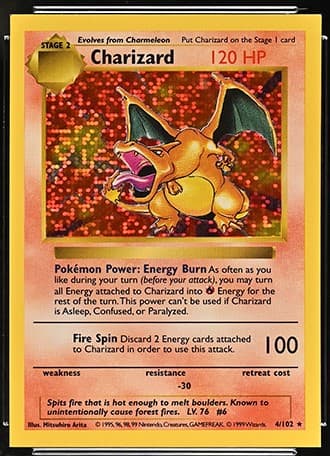
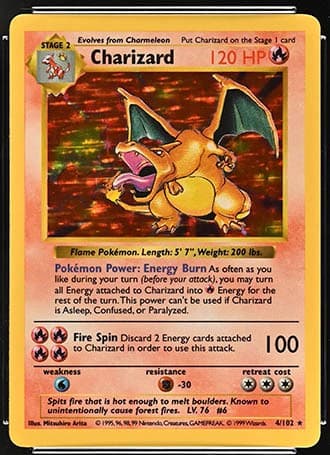
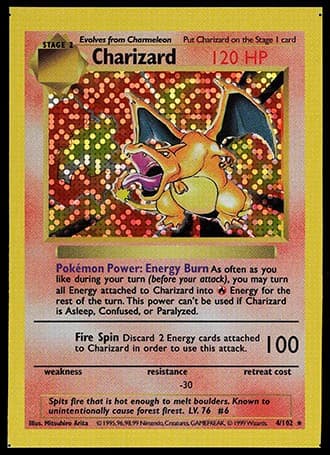
By enlarging and examining the images above, you’ll notice that when switching between the genuine “Disco” holo Charizard and the genuine Shadowless version, there is virtually no shift in the placement of the artwork or text. The layout between the two cards remains consistent, aside from a few missing design elements that were likely omitted during the printing process. Conversely, when comparing the Shadowless example to the counterfeit card, there are large shifts in alignment through the card. Pay attention to the following discrepancies when analyzing the two:
The evolution box in the top left-hand corner is a bit larger on the fake card.
Charizard’s name on the top of the card is a bit larger and taller on the fake.
All of the text in the Pokémon Power and attack sections is too large and runs too far to the right on the counterfeit card.
The box of text at the bottom of the fake card has a typo at the very end: “firest” instead of “fires.”
The card border, which should be a solid "Pokémon" yellow, is the wrong shade of yellow and not a solid color. There shouldn't be any rosette patterns in the border, as they are a separate color layer on genuine cards.
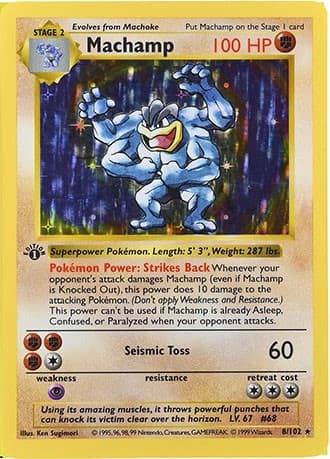
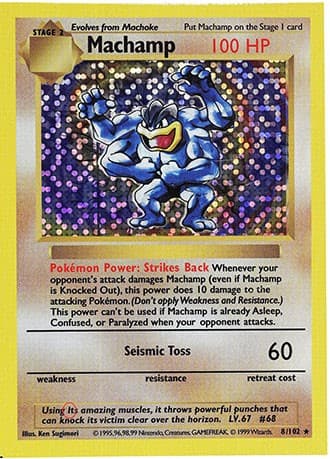
In addition to the Charizard, a Disco Holo Machamp was also included in the submission. However, it too had many issues, including:
Machamp was not printed alongside the standard Base Set holo cards. Instead, it was printed on a separate sheet and was only available through Base Set starter decks; never in booster packs. As such, the existence of a Disco Holo version of Machamp is highly questionable.
The card is missing the 1st Edition stamp, which is on every other English Base Set Machamp (except for those from Trainer Deck A).
The fake card contains a typographical error in the flavor text, using "Its" instead of "its".
This card has the same issues with the border color and printing style as the Charizard and other fakes that were submitted.
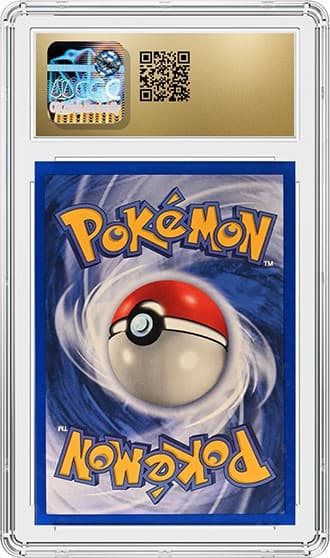
Obviously, the front of the cards was enough to easily condemn these as forgeries. However, CGC’s card graders closely examined the back of the cards for inconsistencies as well.


The counterfeiters did a decent job faking the overall look of the back of the card, but it does not stand up to inspection. A closer examination of the back of the card reveals significant issues. First, the color of the Pokémon logo appears more orange on the counterfeit than on the authentic examples. Additionally, the distinct black-and-yellow pattern inside the “P” in “Pokémon” — which is found on all genuine cards — is absent.


On the left side of the image, the blue border, which is a color referred to as “Pokémon Blue” by printing companies, is another point of concern. This border is printed as a separate color layer on genuine cards and should not display rosette patterns, which are clearly visible on the fake. Finally, the black areas of the counterfeit card lack the final black layer that gives authentic cards their sharp, well-defined lines. This lack of a final black layer makes the fake card look blurry.
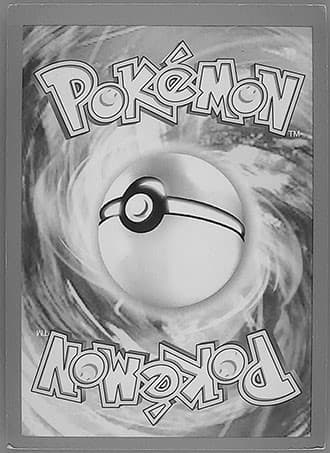
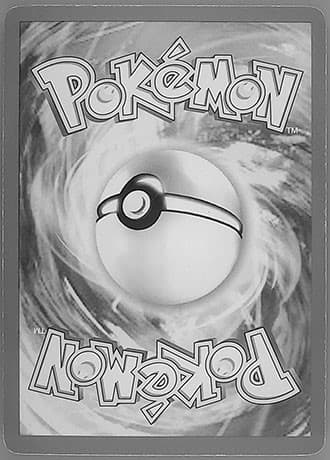
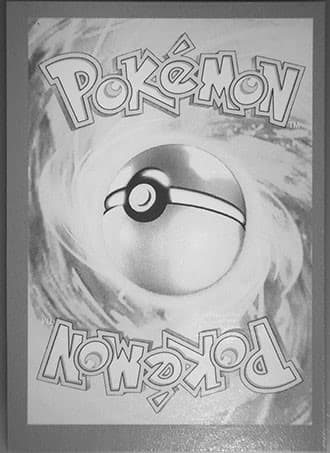
Forgeries are often made using improper materials, such as incorrect inks, card stock and design files. This results in noticeable differences under various lighting conditions. Check out the distinct differences in all four instances of the letter “o” in “Pokémon” in the images above. On the two genuine cards, each “o” contains a smiley face-like pattern, a detail that is completely absent on the counterfeit. Additionally, the counterfeit’s lack of the black layer is apparent, particularly around the artwork’s border, where genuine cards display sharper, more defined lines.
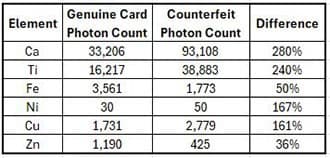
CGC’s card graders also conducted an XRF analysis of the cards. The results revealed that the chemical composition of the ink and paper used in the counterfeit card significantly differs from that of any genuine Pokémon card previously examined by CGC. In fact, the fake Charizard had nearly three times the normal amount of calcium in it, while only having a third of the normal amount of zinc. The ratios on the other elements were also different, as shown in the chart above.
Our analysis confirms that the “Disco” holo test print cards that were submitted to CGC were not authentic. Similar counterfeits — including singles and uncut sheets — have been seen for sale on platforms such as eBay and Etsy, so it is important to be extremely cautious when purchasing such cards, especially when ungraded, obscure or high-value. Every card certified by CGC is backed by the CGC Guarantee that the card is both authentic and not overgraded. Learn more about the CGC Guarantee here.