

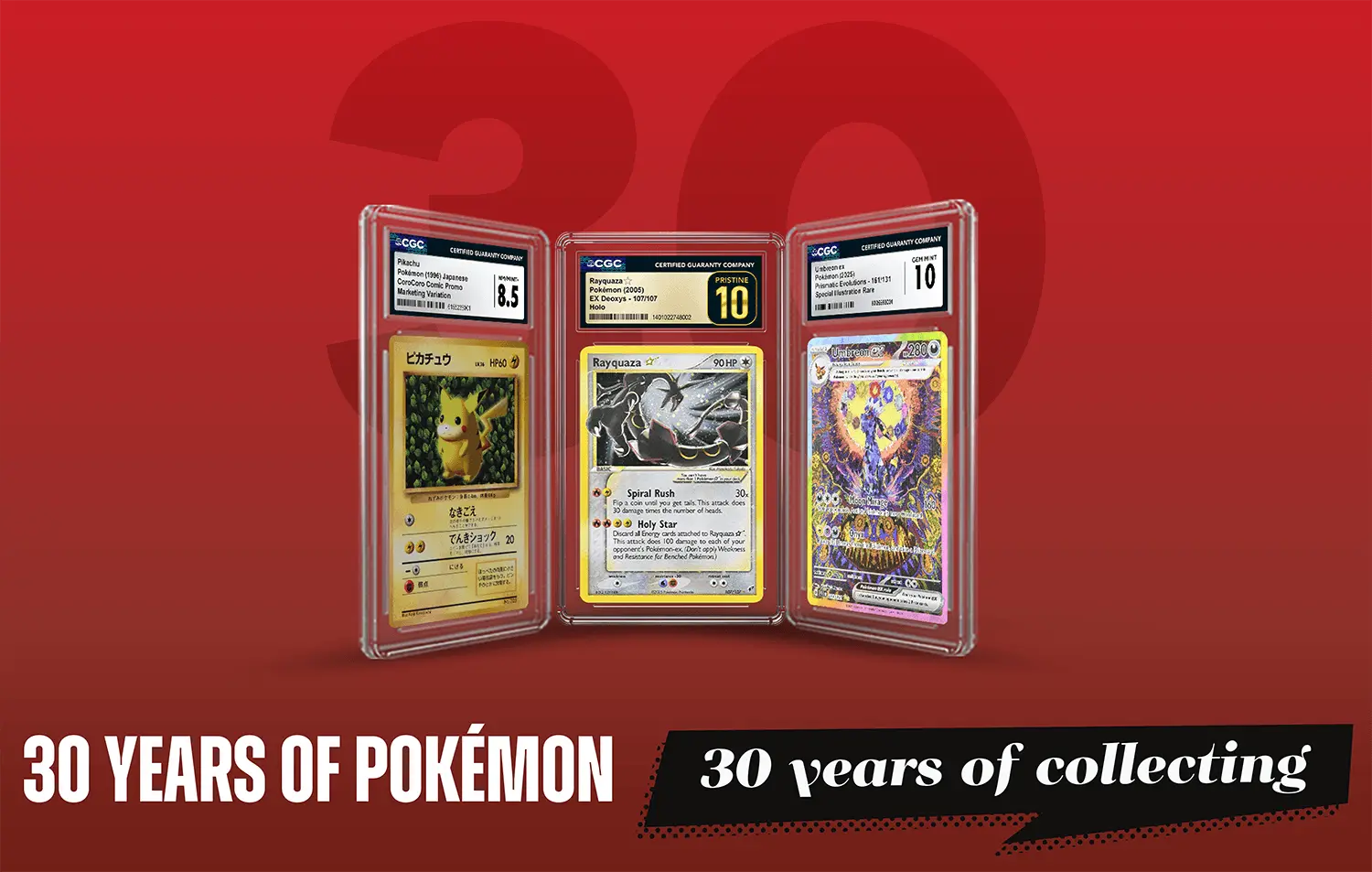
Thirty years ago, Game Freak introduced Pokémon Red and Pokémon Green — two video games that would change the world. These two monster-collecting games soon became a global phenomenon that evolved into a multi-billion-dollar franchise, complete with more video games, anime, movies, merchandise, and, of course, trading cards.
Pokémon cards have continued to evolve with the parent Pokémon franchise, incorporating new creatures, mechanics, and even new artwork and styles into cards to keep things fresh and exciting for fans. To celebrate Pokémon’s 30th anniversary, and to commemorate the upcoming release of the Pokémon TCG 30th Anniversary Celebration set releasing later this month, let's explore how the Pokémon TCG has evolved over the past three decades.
The History of the Pokémon TCG
Before the TCG: Carddass, CoroCoro, and More
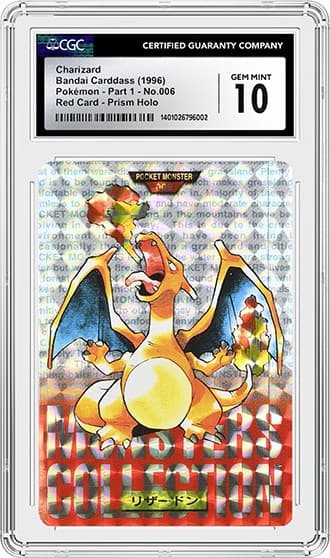
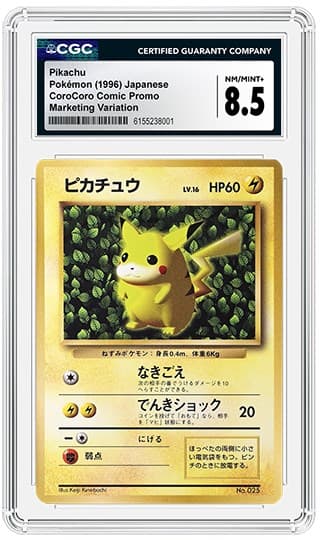
The Pokémon TCG may be one of the largest trading card games in the world today, but back in 1996, it was a Japanese promotional experiment that piggybacked off the success of Pokémon Red and Pokémon Green. To gauge interest in the upcoming Pokémon TCG, Media Factory — the distributor of the Pokémon TCG in Japan — worked with several companies to distribute cards in a variety of ways. Some examples included Bandai’s Pokémon Carddass and a promotional campaign through CoroCoro Comic magazine.
Pokémon Carddass was a Pokémon-themed trading card set that was distributed through vending machines from September 1996 to late 1997. These cards are considered by many to be the first Pokémon trading cards, since the official Pokémon TCG didn’t release to the public until October 1996. The set included 151 cards, each featuring one of the original 151 Pokémon with artwork drawn by Ken Sugimori.
While Pokémon Carddass kept Pokémon fans and collectors busy, Game Freak, Media Factory, and Nintendo worked behind the scenes to create marketing materials for the upcoming official Pokémon Trading Card Game. In the October 1996 issue of CoroCoro Comic magazine, Media Factory showed off some of the first Pokémon cards to the public, including the marketing variant of Ivy Pikachu and a Jigglypuff. These two cards were also included as inserts in the magazine, becoming some of the first Pokémon cards to reach fans’ hands.
Note: The Ivy Pikachu that was distributed as an insert in the October 1996 issue of CoroCoro Comic was not the marketing variation, but the Incorrect Illustrator variant — even though the marketing variation was pictured in marketing materials in the same issue of the magazine. To learn more about the marketing variation and all other versions of Ivy Pikachu, go here.
Taking Over Japan: Base Set, Tournaments, and Contests
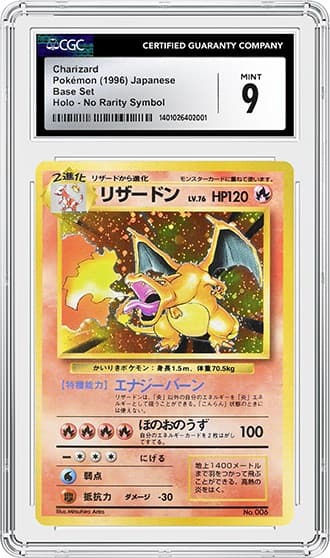
The Pokémon Trading Card Game debuted in Japan at the end of October 1996. The first expansion, Expansion Pack, featured fan-favorite Pokémon such as Charizard, Blastoise, Venusaur, and Pikachu. The first print run of Expansion Pass lacked rarity symbols, distinguishing them as Japan’s true “first edition” Pokémon cards.
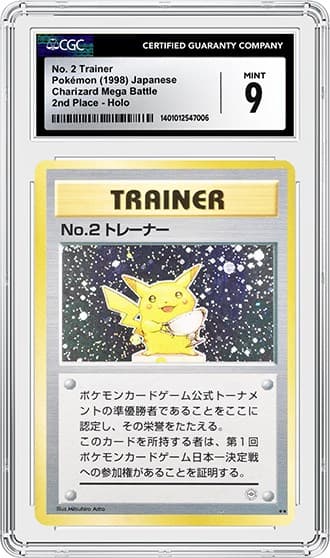
Following the successful release of Expansion Pack, Media Factory — the distributor behind the Pokémon TCG — followed up with several more expansions. In 1997, CoroCoro Comic announced the first official Pokémon TCG tournament, to be held in Chiba in June 1997. First-, second-, and third-place winners of each event received a numbered Trainer card (often called Trophy Pikachu). These Trophy Pikachu cards are now some of the most expensive cards in the hobby.
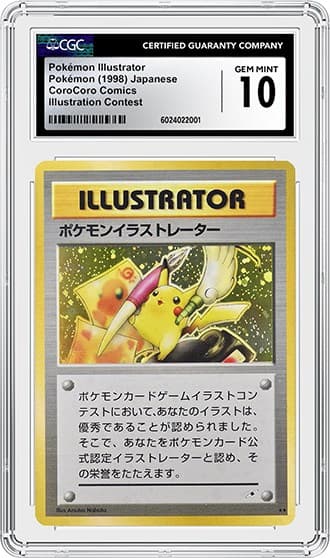
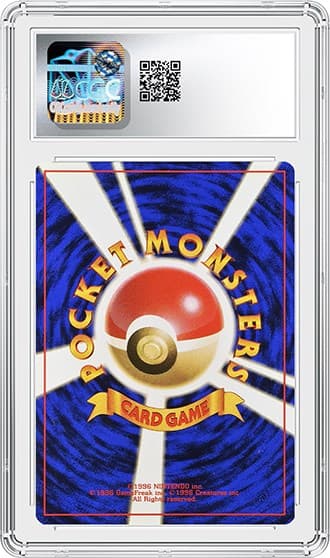
Additionally, as the Pokémon TCG grew more popular in Japan, CoroCoro Comic began hosting Pokémon-themed contests with exclusive promo cards offered as prizes. One of these contests included the notable CoroCoro Comic Illustration Contest, with the ultimate Pokémon card — Pokémon Illustrator — offered as a winning prize. CGC-certified examples of Pokémon Illustrator have sold for millions of dollars, including this example graded CGC Gem Mint 10 that sold for $2 million in March 2026.
The Pokémon TCG Releases Internationally
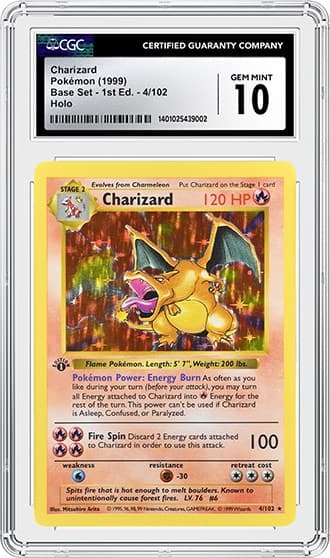
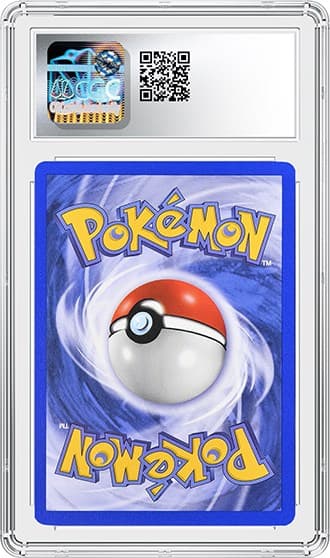
In 1999, The Pokémon TCG was introduced to Western audiences with the release of Base Set. Base Set was released in three waves. The first print to come to market was 1st Edition, in which every card was marked with a “1st Edition” symbol. This print run was extremely limited. Next, the Shadowless print run was released; these cards were the same as the previous print run but lacked the 1st Edition symbol. Finally, all subsequent releases of Base Set were part of the “Unlimited” print run, which added a “shadow” effect around the Pokémon’s art boxes. All three print runs are now rare and extremely coveted by collectors.
By far, the most popular and expensive card in Base Set is Charizard, which still commands thousands of dollars on the secondary market today. Illustrated by legendary artist Mitsuhiro Arita, this iconic Charizard card is easily recognized even outside of the hobby because of its legendary status as a holy grail of collectibles.
Evolving Into a New Era
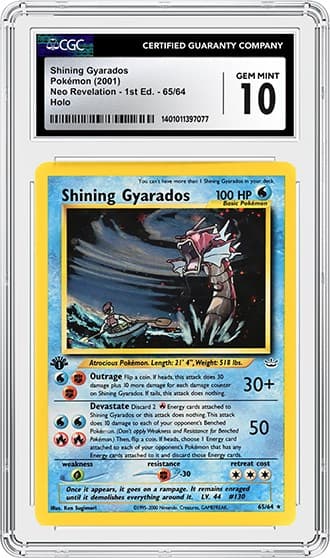
Pokémon Gold Version and Pokémon Silver Version were released in North America on October 15, 2000, kicking off the second generation of the Pokémon franchise. In addition to adding 100 new Pokémon, Generation 2 added a rare chance to encounter Pokémon in alternate colors. These are called “shiny” Pokémon by fans, and they are rare both in the games and in the TCG.
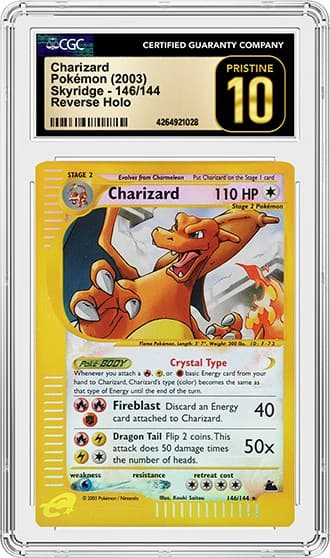
Nintendo launched the Game Boy Advance a year later in 2001, and along with it, a peripheral called the e-Reader. The e-Reader allowed Game Boy Advance users to scan cards with special dot codes into their consoles to play mini games, unlock in-game items, and more. The Pokémon TCG jumped in toward the end of Generation 2. The e-Reader series of Pokémon cards included three sets — Expedition, Aquapolis, and Skyridge — and each set not only featured cards compatible with the e-Reader, but also “Crystal” Pokémon, which were considered equivalent to the former Neo set’s Shining Pokémon, though not in their alternate colors.
Nintendo Takes Over; the EX Era and Beyond
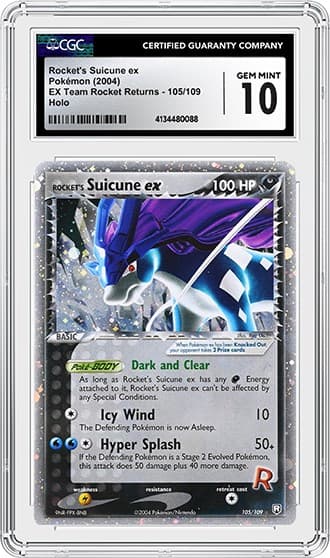
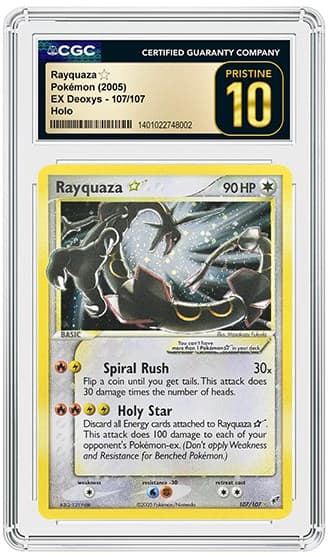
2003 marked a massive shift in the Pokémon franchise. The Pokémon Ruby and Sapphire video games introduced several changes to the game’s core mechanics, which were then introduced to the TCG. One of the biggest changes was the introduction of Pokémon ex — more powerful versions of Pokémon with abilities (a new mechanic that gave Pokémon additional power and personality). In addition to Pokémon ex, Gold Star Pokémon cards were introduced. These cards, like the Shining Pokémon cards before them, showed off Pokémon in their shiny colors. Collectors only had a 1 in 72 chance of pulling one of these coveted Gold Star cards — that’s one in every two booster boxes.
As Pokémon continued to evolve past Generation 3, so did the TCG. Subsequent generations included more powerful Pokémon cards, including Generation 4’s Level X cards and Prime cards, Generation 5’s Pokémon EX, and the introduction of Full Art cards. Generation 4 also introduced fun “gimmick” cards — such as LEGEND cards that needed to be paired together to use in play — that are still popular collectibles today. Some fan-favorites include Umbreon (Prime), Entei & Suicune LEGEND, and Black Kyurem EX.
The XY Factor: 20th Anniversary Promos and More
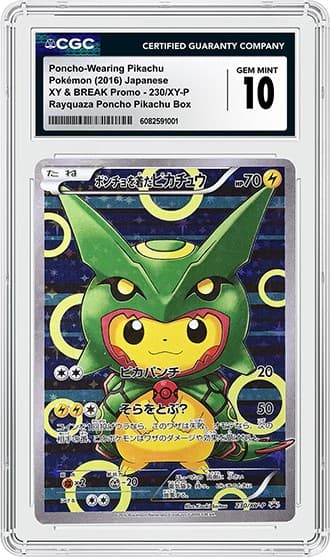
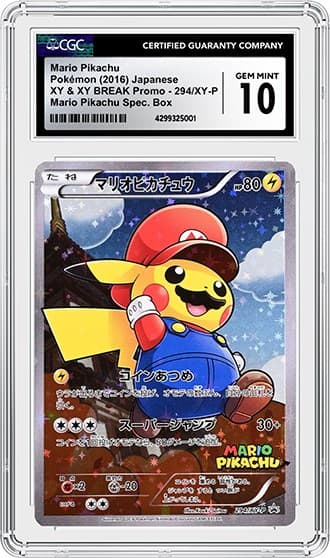
2016 was a very special year for the Pokémon franchise. The entire year was dedicated to the series’ 20th anniversary, and the festivities spread across the entire multimedia franchise, with giveaways, merchandise, and festivities held in the video games, in real life locations, and in the TCG.
North American audiences were treated to two special sets: Generations and Evolutions. Both sets mostly focused on Pokémon from the original Red and Green games, with Generations having a sub-set of 32 cards with special holofoil treatments, and Evolutions being a full reprint of Base Set, complete with secret rare cards.
Meanwhile, Japan received several commemorative Pokémon TCG products, including several cards that were never released outside of the country. These included the famous Poncho-wearing Pikachu promos, Mario-themed Pikachu cards, and more.
Modern Collecting: Sun and Moon, Sword & Shield, and a Global Pandemic
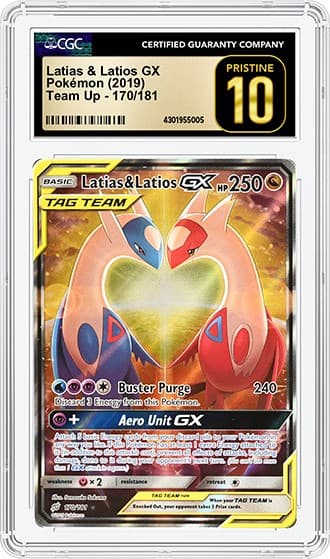
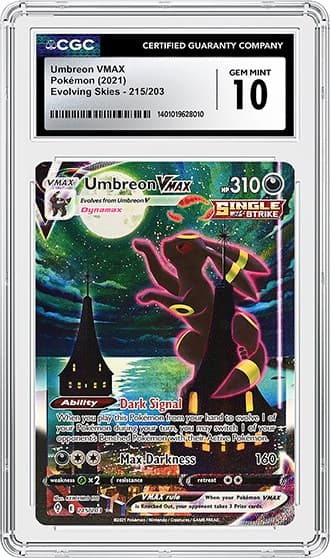
Generation 7 ushered in a new age of the Pokémon TCG, and began what is now considered the modern era of collecting. Pokémon Sun and Moon introduced Ultra Beasts and Pokémon GX cards. It also debuted Rainbow Rare cards, which are full-art Pokémon cards that have a special “rainbow” holofoil treatment. The end of the Sun & Moon era of the TCG introduced the fan-favorite Team Up cards, which showcased two Pokémon on one card, with their abilities combining to offer destructive power to players. One of the most memorable cards from the Team Up era is the Latias & Latios GX alternate art, which is still being chased by many fans to this day.
Pokémon Sword & Shield introduced Pokémon V and VMAX cards, which were used to represent the Dynamax and Gigantamax mechanics, respectively, from the video games. Around the same time that Sword & Shield Base Set released, COVID-19 was declared a global pandemic. Stuck inside with nothing to do, collectors began to sort through their old cards and sell them online, creating a massive boom in the Pokémon TCG marketplace, which is still being felt today.
Into The Present: Pokémon Scarlet & Violet and Mega Evolution
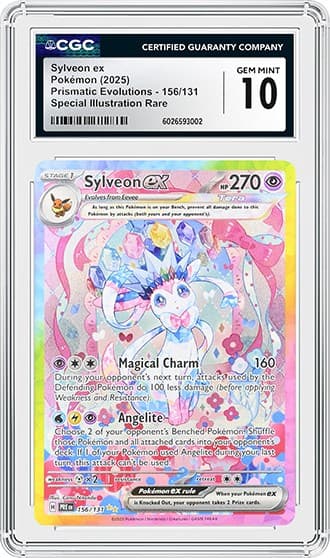
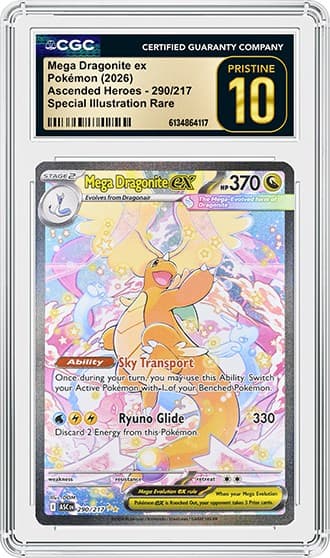
Now we come to the most recent era of the Pokémon TCG. Pokémon Scarlet & Violet didn’t just change up the formula like past sets — it completely revamped the game by introducing new rarities, changing the composition of packs, and even changing the design of the cards themselves. The yellow card borders that had been used on English Pokémon cards since Base Set were replaced by silver borders that matched Japan’s TCG releases. Additionally, The Pokémon Company introduced Illustration Rares and Special Illustration Rares — two new card rarities. These alternate-art cards are similar to Sword & Shield’s Trainer Gallery cards and are often considered the main chase cards in modern sets.
The Mega Evolution mechanic was originally introduced in Pokémon X and Y, but it made a return in the most recent wave of TCG releases. With the release of Pokémon Legends: Z-A, several new Mega Evolutions were introduced to the Pokémon world, and the Mega Evolution era of the TCG has focused on adding these new stars to the trading card game. Already, several rarities have taken the world by storm, including Mega Dragonite ex, Mega Charizard ex, and Mega Greninja ex.
The Pokémon Trading Card Game surely has come a long way, from a small tie-in TCG to a pop culture phenomenon. When did you start collecting Pokémon cards, and what is your favorite card? You can look forward to more articles celebrating Pokémon’s 30th anniversary in the weeks to come!